How to Improve Healthcare Contact Centers for Better Access and Experience
Healthcare contact centers handle more than just scheduling and billing questions now. They're daily fielding prior authorization delays and...
10 min read

Healthcare contact centers handle more than just scheduling and billing questions now. They're daily fielding prior authorization delays and medication clarifications, all while coordinating care between departments and anxious patients.
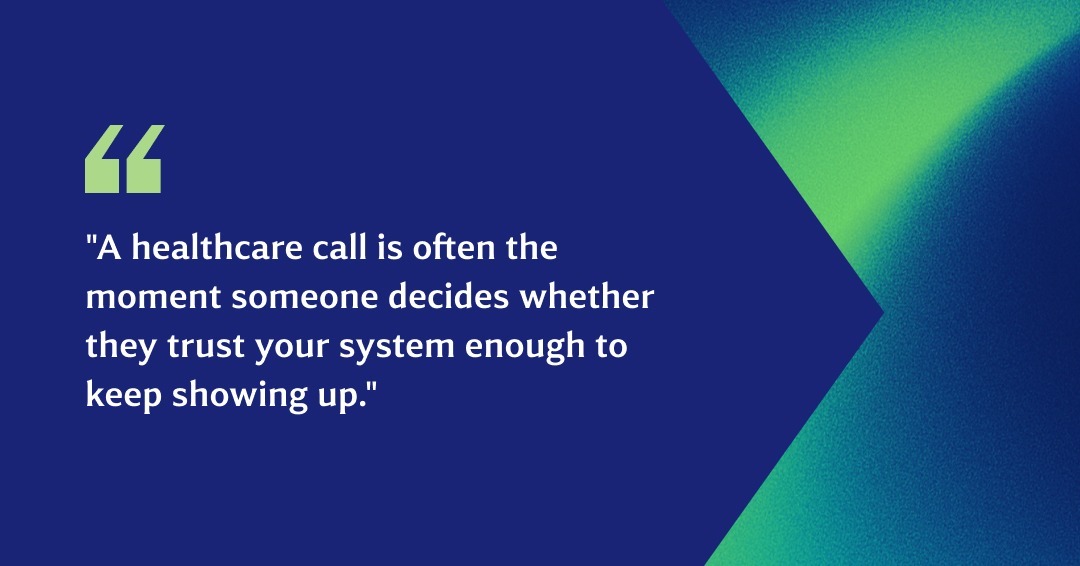
Any playbook that doesn't account for that mix of clinical urgency and emotional weight is bound to break. That's because, unlike a retail call that's purely transactional, a healthcare call is often the moment someone decides whether they trust your system enough to keep showing up. That trust breaks down at the staffing level first.
Staffing models built around average handle time punish agents for taking the extra ninety seconds a confused patient needs, and disconnected systems make it worse by forcing them to toggle between screens while the patient waits.
Leadership compounds the problem by tracking metrics that are easy to pull instead of ones that predict whether a patient reschedules or gives up.
This blog walks through what changes when you treat access and experience as the same problem instead of two separate initiatives. That means rethinking which metrics actually earn a place on your dashboard, where automation makes sense, and how to structure a contact center so complexity gets routed to the people equipped to handle it.
Most healthcare operations are feeling the pressure from three sides at once, more than their current teams and systems can absorb.
Firstly, call volumes are increasing because care journeys are now fragmented into more pieces across more settings. A single hospital visit previously generated one round of contact. That same patient might now be monitoring their vitals from home, opting for telehealth visits, or following up with retail clinics.
Each one generates its own scheduling calls and billing questions. Since most of those services are run by the same health system, all the calls route back to the same contact center even though the care itself happens outside the hospital walls.
Secondly, patients now compare their healthcare experience to other services they use. They expect the same speed they get from a banking app or the same personalization they get from a retail shopping app. Simply increasing headcount or adding a new digital channel isn't enough to meet those expectations.
Lastly, healthcare contact centers are struggling to staff up in the first place. Hiring and training agents to handle clinical and insurance questions takes time and money, which becomes even more costly when factoring in the high turnover rates. Organizations are losing agents faster than they can replace them.
Hiring more agents or investing in new software doesn't fix any of the challenges mentioned above. Your healthcare operations will still deal with higher wait times on average. Hence, it's only natural to first understand what those bottlenecks are in the first place.
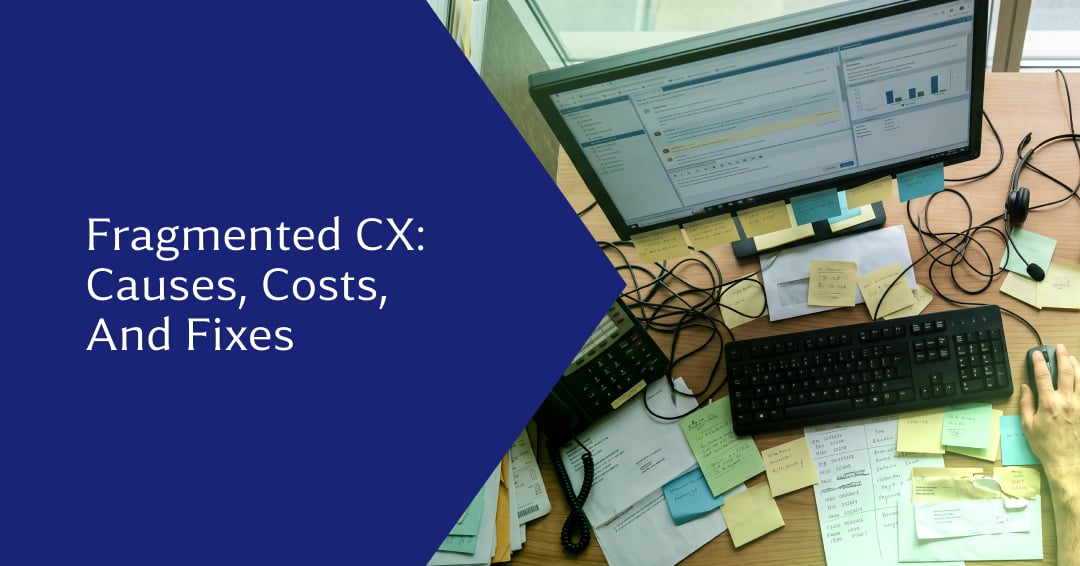
Every new channel creates more friction if it's running on its own platform. Many healthcare organizations make that mistake. Their voice, SMS, chat, and portals are often living in isolated systems.
Let's take an example case. Picture a patient who calls about a billing question in the morning and then leaves a message on the portal about a prescription in the night. They then text the next morning to confirm an appointment.
Contact centers log all three as three different events. Nothing about the earlier conversations carries forward. Hence, the patient ends up repeating themselves to whichever agent picks up next.
The contact center is responsible for answering all the inbound calls but it's usually a different team (or vendor) handling the reminders and recall campaigns. Neither side knows what the other is doing or has done.
That's why patients get a reminder call for an appointment they already confirmed with an agent an hour earlier. It's also why an overdue screening can go completely unnoticed because patients are flagged in a system the outbound team never checks.
Healthcare agents can pull patient records during calls without much trouble. But whatever the call captures doesn’t automatically write back into the same chart. Someone has to manually re-enter a schedule change or new contact details every time. That wastes time and increases the chance for errors. Scale that process across thousands of patients and you get an EHR that stops showing what actually happened on the call.
Healthcare contact centers commonly track handle times, abandonment rates, and first-call resolutions. They're easy, but they don't really show whether the patient showed up for the appointment they confirmed or followed through on whatever happened in the call. Hence, contact centers can hit every one of their internal targets and still lose patients between visits.
Routine calls make up for a large portion of daily volumes of a healthcare contact center. You have hundreds of patients calling in to reset their portal passwords, request a refill, reschedule an appointment, or ask a basic question.
These calls don’t require much judgement, but still pull the same agent off the floor as a complicated scheduling conflict. Without automation to absorb that predictable volume, front-line staff stays buried in low-value work while high-value ones pile up in the queue.
Fixing the structure matters more than adding another point solution on top of it. The fixes below are designed to specifically target the bottlenecks we mentioned above.
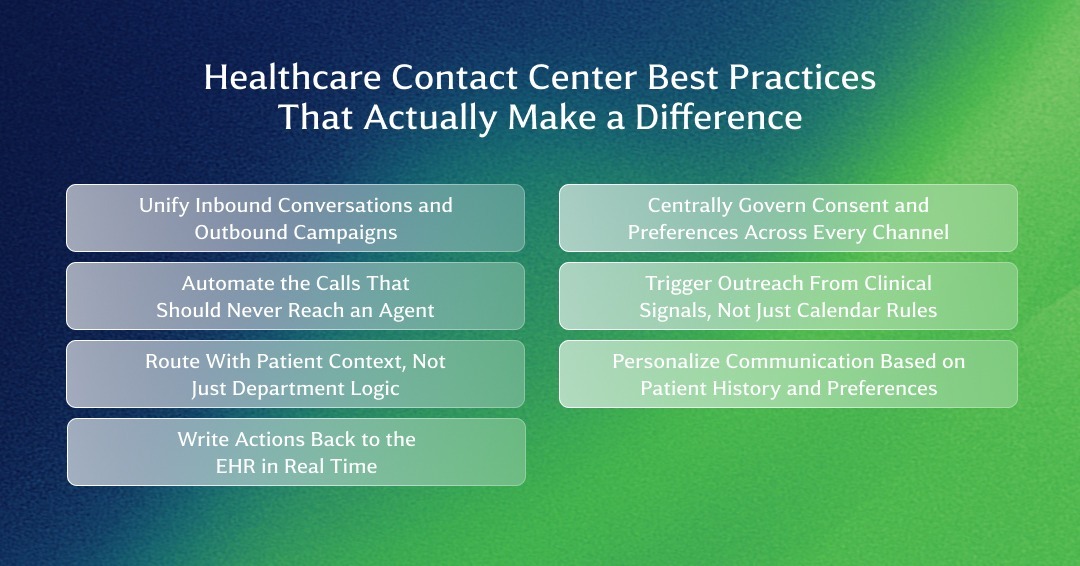
Give your agents visibility into the patient's history. Someone answering a call should know what messages that patient has already received. Outbound campaigns need the same visibility but in reverse. Knowing what just happened on a live call allows the campaign to adjust itself instead of sending a reminder for something the patient already handled with an agent an hour ago.
Put both pieces together, and the patient stops having to reset the conversation every time they switch channels. This is the single highest-impact structural change available. It's also usually the hardest one to retrofit because most healthcare operations have built their inbound and outbound funnels as two separate teams from day one.
Routine calls don't require a human agent. It's best to automate that predictable volume, freeing up your agents to focus their efforts on calls that genuinely require judgment and empathy.
Ask yourself, do you really need to involve a live specialist for a mere password reset? An AI-powered healthcare contact center can absorb that entire volume, clearing the queue so that complex cases get the attention they actually need.
Routing patients should always happen based on context. What has the patient already done and what do they need right now? A system that just lands every caller into the same queue regardless of history is just pointless deflection.
Intelligent routing looks at what the system already knows, like an open referral or a recent visit, and sends the patient straight to whoever can actually help. Asking a caller to choose between "billing" and "scheduling" throws all of that context away.
A healthcare contact center needs bi-directional integration with the EHR. That’s how patient records are updated automatically without delay. An appointment that was rescheduled on a live call shows up in the EHR in real time. The agent doesn't have to manually update two different systems with the same information after the call ends. The clinical staff also can trust the data because they’re always working from up-to-date records.
Patients are required to give their consent for every channel, but every channel doesn’t need to handle those preferences in isolation. Someone who opts out of SMS shouldn’t still receive texts because that preference lives in a different system than the one sending the messages.
Fragmented governance is the biggest challenge for compliance programs. Healthcare organizations risk opening themselves up to audits when they’re handling preferences per channel or per vendor.
Outreach that runs purely on a fixed schedule no longer works to improve patient experience. A better approach coordinates outreach with clinical signals in real time.
For example, a patient who is overdue for a screening is automatically flagged by the EHR, alerting an agent to follow up right away. Batching those flags into a weekly list might feel efficient, but by the time anyone reaches the patient, their condition may have worsened, or they’ve already found care somewhere else.
Your EHR has everything you need to know to personalize communication for each patient. Sending appointment reminders and care alerts in their preferred language is one of the simplest ways to improve adherence rates.
The patient's history can also help shape your outreach to connect with them better. Someone managing a chronic condition needs more frequent check-ins than someone who came in for a one-time visit.
A healthcare contact center solution that ignores this context sends the same generic messages to everyone, which patients tend to always ignore.
An AI-powered contact center isn't some futuristic dream. Most healthcare organizations are already automating a major chunk of their daily workflows to scale well without leaving behind any patients. Here are four specific areas where that approach shows value:
Conversational AI assistants are highly efficient at handling routine requests at scale, and they do that through human-like conversations instead of the fixed scripts older robo bots relied on. Patients can describe their issue in plain language over voice or text, and get a quick response that actually fits what they asked.
That same conversation can also hold multiple requests. A patient might ask about available time slots before booking an appointment and then ask about an estimated bill. The AI will resolve all those requests without transferring them or putting them on hold. That's because the AI keeps track of context throughout, resolving everything in one pass instead of restarting the conversation with each new request.
That efficiency shows up directly in headcount. A single AI agent can resolve thousands of routine calls 24/7, and you can scale that capacity up or down by adding more agents during seasonal spikes instead of hiring and training new staff.
Outbound is where automating a healthcare contact center creates the most measurable value. AI agents can run appointment reminders and recall outreach on their own without involving any staff.
Chronic patients who need frequent follow-ups, preventive screenings that often slip through the cracks, and post-discharge check-ins - AI agents handle all of it at a scale no human team can match by dialing numbers all day. That scale translates directly into faster access to care and better adherence.
Chatbots are specifically designed to answer questions and move on. Orchestration is a whole different take on that journey. It monitors every ongoing patient interaction to decide the next best step in the moment. That could be anything from which channel to use and when to reach out to whether to hold off because a human agent should step in instead.
Orchestration also shapes the message itself by pulling context from the patient's history and whatever clinical signals are coming from the care team.
That's what separates an orchestrated journey from a generic self-service chatbot. Someone overdue for a screening needs a different engagement model than someone coming in for their first visit. An AI contact center built around orchestration makes that call on its own. It doesn't treat every touchpoint like it started from zero.
We've already talked about how your front-line team needs full context on their screen to help patients better. That context matters most at the exact moment a patient requests a human agent or when the issue falls outside the AI's parameters.
Every time a call is escalated, the AI ensures that the human agent gets everything the patient has already said, their medical records, the reason for escalation, and whatever else the agent needs in the moment. The agent picks up and jumps straight into resolution instead of asking the patient to repeat something they already told the AI.
A clean handoff like this is the difference between an AI system that actually understands the patient and one that's just another hoop to jump through before reaching a solution.
Standard metrics like average handle time and call volume tell you how busy your team was. What they don't tell you is whether the patient's problem actually got solved. That's why most patients end up calling again for the same issue. First contact resolution is the metric that catches this. It doesn't matter how quickly you're answering calls if the problem isn't actually solved.
Watch your abandonment rate as well. Every caller who hangs up before reaching anyone is telling you your queue is too long or your IVR menu is badly designed.
Then look past contact center metrics entirely. Did reminder calls actually reduce no-shows? Did proactive outreach reduce avoidable ER visits? Is automation closing preventive screening gaps faster than before? These are the numbers that connect the contact center to outcomes leadership actually cares about in a healthcare setting.
There's no shortage of vendors claiming to fix your contact center. But before signing anything, get specific about what you're actually trying to fix. A platform with a long feature list doesn't help if the communication gaps you already have are still there once it's live.
Start by confirming whether the platform actually integrates with EHRs and scheduling systems for a bi-directional flow. A platform that can't see patient history or write back forces your agents to work across two systems at once.
Start by confirming whether the platform integrates with EHRs and scheduling systems for a two-way flow. A platform that can't see patient history or write back forces your agents to work across two systems at once.
Then look into compliance. A platform that's specifically designed for retail ticket routing won't make HIPAA happy when it starts handling your PHI workflows. Encryption and BAAs need to be built in from day one. So ask the vendor directly how escalation and handoffs work, because a platform that's great at containment but weak on context transfer just moves friction from the queue to the agent.
The right solution fits the specific mix of inbound volume and outbound outreach a healthcare organization actually handles and the clinical complexity behind it. The wrong one adds another dashboard nobody checks.
Many healthcare contact centers add a new channel or automate a few routine tasks and call it modernization. But do those changes actually reduce the work your staff has to manage daily? Does care become easier to access for patients?
Those outcomes matter more than any long list of features a platform offers. It’s what WestCX prioritizes, and why our healthcare partners report 35% fewer no-shows and cancellations, while getting back over 2,000 staff hours that are now spent on patients instead of routine grinds.
Our engagement platform ensures each interaction is more useful (and helpful) by accounting for the patient’s context as well as preferences for every message sent out.
WestCX also integrates with all your existing systems and can go live within 90 days, without requiring you to rebuild your stack.
That kind of consistency is powered by WestCX Orchestrate. That's our orchestration platform, and it integrates with your EHRs and contact center systems to coordinate every patient touchpoint from one place.
That's also where our AI-powered IVAs come in. Using conversational AI that sounds like a real human exchange instead of a scripted one, they absorb your routine workflows like appointment scheduling, prescription refills, and billing questions. None of it requires anyone on your team to pick up the phone.
It's why 65% of inbound calls get contained automatically on WestCX. Nearly two out of three calls that used to land on your front desk now resolve on their own. Healthcare providers save more than $5,000 per FTE every year and cut 7-10 minutes off every patient interaction. That’s time your staff gets back for the calls that actually need a person.
If your contact center is still absorbing all of that manually, the gap between where you are and where WestCX customers already stand is smaller than it looks. Schedule a demo and see for yourself the difference WestCX Orchestrate brings.
Healthcare contact centers handle more than just scheduling and billing questions now. They're daily fielding prior authorization delays and...
Fragmented customer experience doesn't just happen out of the blue. Organizations make it possible, one disconnected system at a time. They're...

Somewhere right now a customer opened an app and browsed for a new couch, but then got an email an hour later for a discount on shoes. Nobody signed...