Digital Care Programs Help Reduce Hospital Readmissions
As we approach the end of 2023, healthcare providers continue to face an array of challenges that have a negative impact on patient outcomes and ROI....
7 min read

The patient onboarding process sets the tone for everything that follows. If it's slow, confusing, and scattered, both your patients and staff will feel it. Automation helps clear the clutter. It takes your messy workflows and removes the noise and chaos.
By shifting routine tasks to an automated system, your team is free from chasing paperwork or double-checking every form. This guide breaks down where automation fits into the patient onboarding process and what to keep in mind if you're thinking of making the switch.
Manual onboarding creates more problems than it solves. There's a reason why modern providers are shifting away from it. Here’s what it gets wrong:
Automating the patient onboarding process is nothing less than a strategic advantage in the healthcare sector. The traditional setup, where staff members and patients are juggling phone calls and clipboards, wastes everyone's time. It only ends up frustrating patients before they even see their doctor.
Healthcare automation, though, addresses all those issues, creating a smoother, more personalized experience for patients and staff alike.
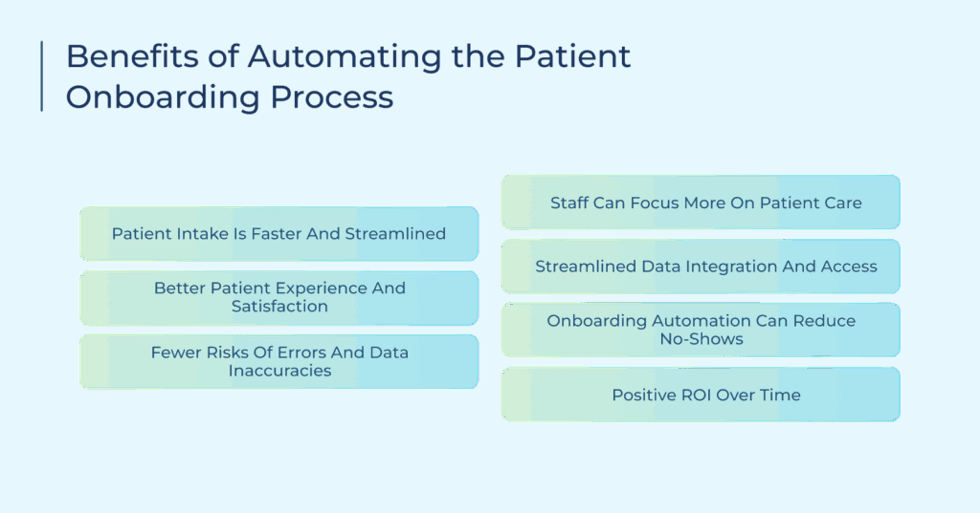
Patients don't like showing up 30 minutes early just to fill out paperwork. They prefer to immediately meet their doctor to discuss their health concerns. The staff, as well, would prefer doing something more important than spending precious time manually entering handwritten information.
Digital forms fix this headache. Patients complete their information at home without stressing over a clipboard in a crowded waiting room. Returning patients see their previous answers already filled in. They just update what's changed since last time. Additionally, your staff gets clean, complete information before patients walk through the door.
Patients of today expect convenience. They are already accustomed to banking on their phones, ordering items online, so why should they waste time filling out paperwork in a doctor's office?
Digital onboarding feels modern and respectful of patients' time. People can fill out forms at home. There's no need to rush through every question, and you'll always come to the clinic prepared because automated reminders will inform you beforehand what exactly to bring.
This is how you use automation to improve your patient experience and satisfaction.
When staff transfer information to computer systems, handwritten forms create transcription errors. Poor handwriting leads to mistakes in patient names, addresses, and critical medical information. These errors delay care and create billing problems that take weeks to resolve.
Digital forms validate information as patients enter it. Zip codes automatically populate cities and states. Insurance verification happens instantly instead of during the appointment. Required fields prevent patients from skipping important sections.
When data flows directly from patient input to electronic health records, human error drops significantly.
Automation helps healthcare workers get their jobs back. Receptionists can actually help patients instead of pushing paperwork, and nurses start appointments with complete information already loaded in the system.
Most importantly, doctors focus on medical decisions instead of administrative cleanup. Everyone does what they trained for instead of fighting with forms or becoming part-time data entry clerks.
Paperwork creates chaos. Your staff only ends up chasing verifications and confirmations from different departments, glued to a phone for most of the day to try to piece together a complete picture of each patient's health.
Digital onboarding connects everything. Insurance verification happens automatically. Prescription histories are pulled from pharmacy databases. Previous test results appear instantly. Healthcare teams can actually see the whole patient history in one place, which means better decisions and fewer repeated tests.
It's normal for patients to forget their appointments. Some just panic about missing paperwork and cancel last minute rather than show up unprepared. These empty appointment slots cost healthcare providers money and delay care for other patients.
Smart reminder systems work through multiple channels: texts, emails, and phone calls. They use whichever method patients prefer. Remember that your best chance of improving patient adherence is when they complete intake forms ahead of time. This way, they feel invested in keeping their appointments.
Healthcare executives need to see numbers that make sense. Onboarding automation costs money upfront but pays for itself quickly through time savings and improved efficiency. Providers typically see returns within their first year.
As for how this works? For starters, you reduce labor cost because your staff spend less time on data entry and error correction. You also see fewer insurance denials because of accurate billing.
Patient satisfaction scores go up, leading to more referrals and better reimbursement rates. Providers see more patients per day because they're not drowning in paperwork. These benefits build on each other as organizations get better at using their automated systems.
Healthcare providers can automate their onboarding process one piece at a time, connecting each step to create a smoother experience for everyone. Most organizations see dramatic time savings once they get their systems talking to each other.
Why make patients show up early to fill out forms they could complete at home? Pre-registration sends paperwork to patients before their appointments, letting them work through everything when it's convenient. No more cramped waiting rooms with people balancing clipboards on their knees.
Send forms through email or text after someone books an appointment. Your front desk gets clean information ahead of time, so staff can actually greet patients instead of immediately handing them more paperwork.
Electronic forms keep everything secure and HIPAA-compliant. They are also highly convenient. Patients can complete their forms on their phones, tablets, or computers. They can even take pictures of their insurance cards and driver's licenses instead of remembering to bring them.
Additionally, as is the nature of digital forms, unskippable or required fields ensure your front desk gets complete data every time.
Patients get upset when they find out their copay is higher than expected. Your billing team also spends hours dealing with claim denials. Automated verification fixes these problems by checking coverage before appointments happen.
The system verifies insurance as soon as patients submit their information. You find out about coverage limits, copay amounts, and any authorization requirements ahead of time. Patients know what they'll pay before walking in, and your billing team avoids the headache of rejected claims.
The system can send patients a secure link to pay their copay before the visit. It’s a simple process without any phone calls or front-desk delays. Patients can easily pay from their device like any other online payment. It saves time on both sides and clears up any confusion about what’s owed.
Scheduling systems show real availability based on the provider's calendars. Patients can pick times that work for them without waiting for callbacks. They also get instant confirmation with all necessary details like the appointment time, location, and preparation instructions.
Automated scheduling, basically, eliminates all the frustration patients usually face when trying to book an appropriate time slot over the phone or in person.
The fact is that appointment reminders significantly reduce no-show rates while improving patient engagement. Those are two major advantages every provider wants to achieve.
Set your reminder systems to send notifications 24-48 hours before appointments, with follow-up messages on the appointment day. Use the channel the patient prefers (or multiple touchpoints) to ensure they get the message.
Two-way messaging is critical here as it lets patients communicate with you without phone calls during busy periods. So, patients can confirm attendance, reschedule if needed, or ask questions about preparation requirements.
Automated instructions ensure that patients show up prepared with the right documents. Once someone schedules an appointment, the system should automatically send instructions, checklists, or even videos. These, though, should be customized based on the appointment type. This helps remove any potential delays on the appointment day.
Before picking a patient onboarding platform, take a step back and look at how things actually work in your office. What slows your team down? What gets repeated over and over? That’s what the platform should fix. Here’s what to look at when comparing options:
 How Does WestCX Help in Automating Patient Onboarding?
WestCX removes the manual steps that are slowing down your patient onboarding process. With our specialized platform, your patients can fill out forms, schedule appointments, and confirm their details without ever calling the front desk.
Everything connects directly to your EHR, so there’s no need to re-enter information or chase missing data.
Even better, our AI-driven SMART Agent makes it easier to manage routine questions and requests. Patients can reach out by phone, text, or chat to get help right away.
It can schedule visits, check insurance, process prescription refills, and handle basic billing questions. It's the perfect concierge to reduce your incoming calls, cut down wait times, and free up your staff to focus on care.
Because SMART Agent pulls directly from the EHR, you stay aligned with HIPAA requirements and avoid the risk of outdated or inconsistent records.
If you’re comparing patient onboarding platforms, see how WestCX keeps the process simple for both patients and staff. Book a demo today.

As we approach the end of 2023, healthcare providers continue to face an array of challenges that have a negative impact on patient outcomes and ROI....

Getting vaccinated against the flu is all too easy to neglect; this leaves healthcare providers wondering how to increase vaccination rates when...
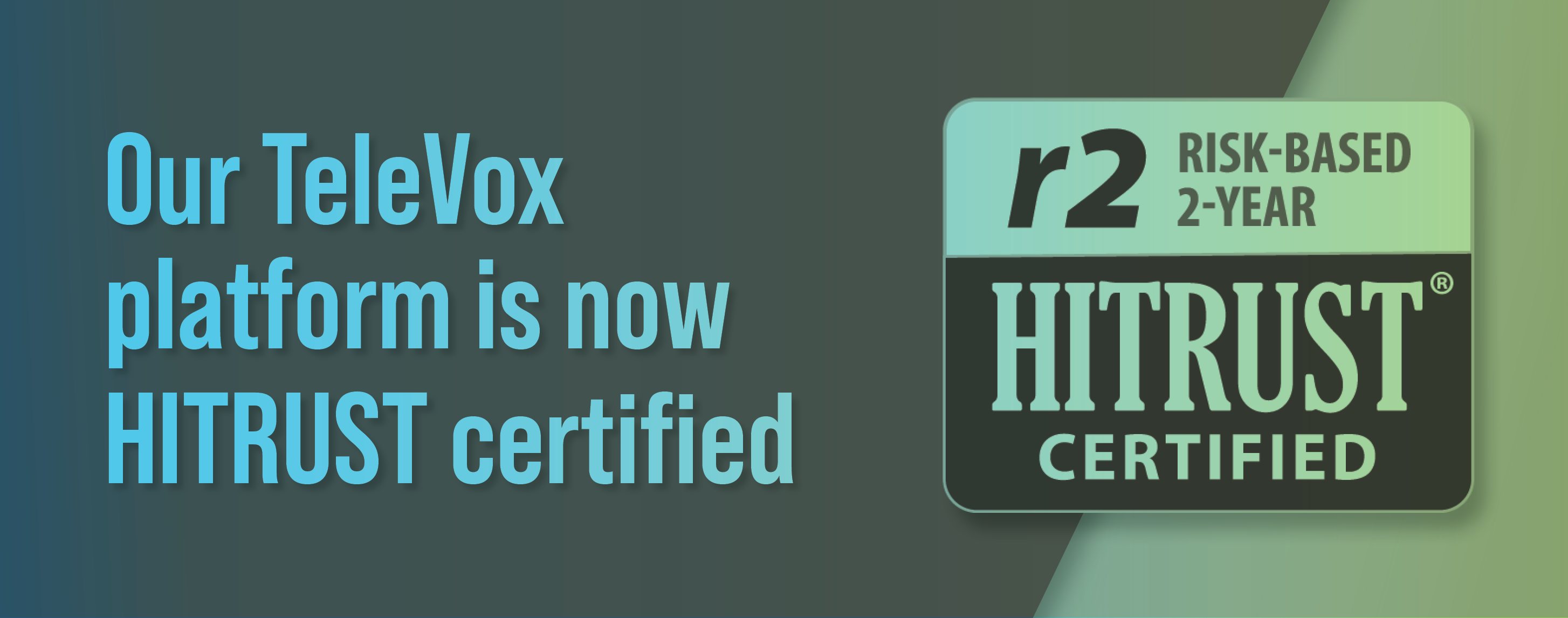
By: Naik, Yogesh H, WestCX Information Security Manager WestCX’s industry-leading, omnichannel patient relationship management platform just became...