Cross-Selling in Banking: Matching Account Signals to the Right Offer
Ever received a call from your bank trying to sell you an additional product or service? That's cross-selling, a sales technique that aims to...
10 min read
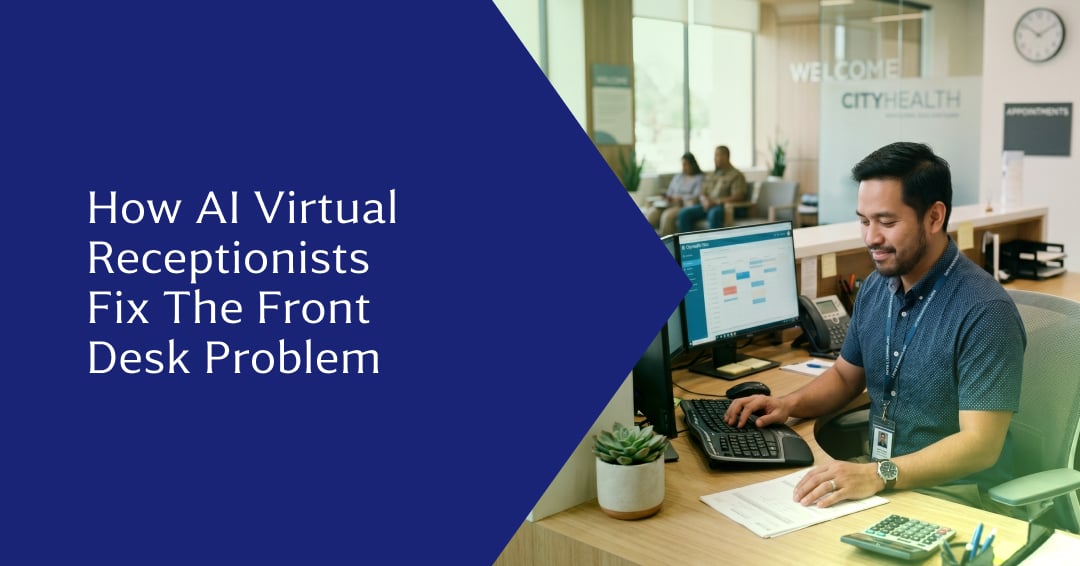
Front desks in healthcare have turned into high-volume communication hubs. What used to be simple coordination now means handling constant questions and requests across phones, walk-ins, and digital channels.
Patients now want quick answers and flexible access even during the busiest parts of the day. They don't care about how busy or overwhelmed your front office is. They'll just turn to another provider who can meet their expectations.
That gap between what patients expect and what teams can realistically handle is where the pressure builds. It’s also where healthcare organizations start looking at practical tools like AI receptionists to take routine work off the front desk without changing how care is delivered.
Walk into any healthcare provider and you'll see just how chaotic the front desk can be. The phones are ringing nonstop. Patients are lined up waiting for help. Some are there for billing issues that can't even be handled at reception. Someone cuts in line to ask about a copay. A staff member interrupts to track down patient information.
All this and the person sitting at the front desk is somehow expected to handle all of it without missing a beat. That's not an unusual morning. That's the job and it's every morning for a healthcare organization.
Front-office teams manage a workload most people outside healthcare aren't even aware of. They're responsible for scheduling, cancellations, insurance, check-ins, refills, prep calls, provider coordination, and a lot more.
That volume is hard to manage for even a small team. The variety also makes it harder. Each task needs a different kind of focus and there's rarely a clean stopping point between them.
Hence, it's normal for a front desk to be overwhelmed. The problem is that patients feel that chaos as well. Someone calling in for an appointment but doesn't get through will just find another provider. They'll not try again.
This is more of a structural problem than a performance one. The people behind your front desk are working hard. They’re trying their best to get through to each patient. An AI-driven virtual receptionist is built exactly to empower your human teams to address this workload challenge in healthcare.
The problems your front desk teams are facing aren't new. What's actually new now is that there's a direct fix for each of those problems without hiring more staff. AI receptionists aren't some novelty idea. They're practically being used in healthcare for measurable outcomes.
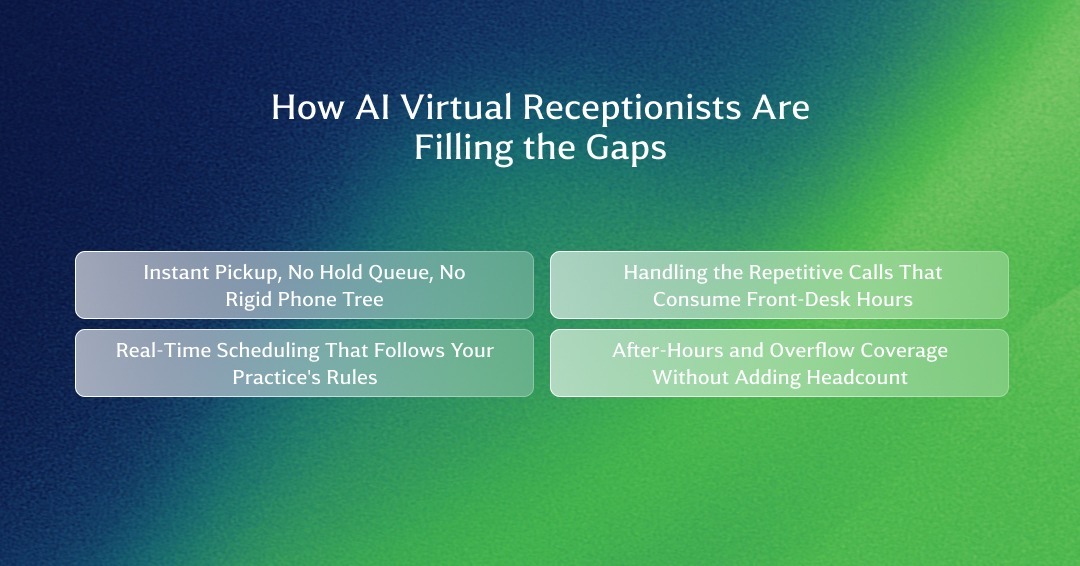
It's rare for a patient call to get through to their provider without any wait times or navigating a phone tree. Those features are there for the provider's convenience, not the patient's. But that's also a major friction point that leaves 42% of all incoming calls unanswered during business hours.
AI virtual receptionists pick up calls immediately. A dozen patients can call at the same time after midnight and all of them will get answered at once. There are neither any wait times nor a reason to press 1 or 2 on a menu.
Patients have to only hear one or two rings before talking to the AI receptionist directly. "I need to move my Friday appointment to Sunday." - that's all they have to say and the AI will start moving the request forward within the same conversation.
Scheduling isn't as simple as it sounds. Every booking decision involves a chain of details like which provider the patient wants to see and why, whether they need a referral and whether their insurance is valid.
Someone working the front desk for a month will learn all these rules by heart but errors are still bound to happen when they're handling hundreds of bookings every week.
AI receptionists don't have a learning curve in healthcare for starters. They start pulling information from the EHR or PMS as soon as they're deployed, managing large patient volumes on day one.
That too without any chance of errors. You only have to make sure that the AI is fed all of your practice's rules to handle repetitive tasks like appointment scheduling, insurance verification, and routine questions.
Patients end up finishing in minutes rather than waiting on hold for someone who can finally pull up the calendar. That level of automation also stops your front desk from burning out. They instead focus on complex cases or interactions that require their human judgment.
Expanding the same point as above, front-desk teams are known to answer the same questions several times a day. Is my insurance valid? What are your hours? Do you provide XYZ service? How do I request a refill?
Each of those routine questions takes a few minutes to address but add that up across maybe 50 calls a day, and that's a lot of wasted time that could be spent elsewhere. AI receptionists are designed to take that entire workload off your teams. They'll answer all routine questions 24/7 at scale, only routing complex cases to a human staffer.
It's also not just routine questions. Since the AI is hooked up to all your data systems like EHRs, PMS, billing, scheduling, etc, it can pull the information required to answer any question the patient asks.
Picture someone calling to ask what they need to bring to an upcoming appointment. The AI will quickly check the provider's requirements in the system. It can then tell the patient that the visit requires a specific lab result or referral.
Healthcare isn't a 9-5 industry. Patients will call their providers whenever they need to, even if that's on a holiday. But organizations can't just force their employees to do double shifts or increase headcounts for the night. That's adding to overall expenses.
AI virtual receptionists keep the healthcare line open after hours. They bring the same communication efficiency at night that they do in the morning. That means patients get instant answers and resolutions 24/7 without the provider facing high turnover rates.
AI virtual receptionists aren't meant to replace your front desk staff. They're meant to handle large volumes of work, essentially stopping human teams from working as both a receptionist and a call center.
There are two types of front-desk calls and they require completely different things. The first type is predictable and in large volumes. Scheduling, refills, routine questions, etc, have known answers. They all follow the same pattern and don't require any human judgement.
The second type is different and requires a human person on the other end. An anxious patient with a billing dispute wants to be heard. Someone with a complex medical history wants someone to guide them through with empathy. Such cases require context and the ability to adapt in the moment.
AI receptionists address both types of calls. They automatically handle the routine queries at scale while routing the calls that require human judgment to a human specialist.
This ensures that the lines aren't held just because a care coordinator is taking their time fielding a complex call. Patients also don't have to be concerned about getting scripted responses when they need an actual person.
Handoffs are the moments that define whether a patient trusts an AI system. What happens when the AI can't help a patient? A poorly designed system just transfers them to a human agent without context. The patient has already given their name and the reason for calling to the AI. They'll not appreciate having to start over with the human agent. But that's the reality of what most automated systems are doing these days.
A well-built AI medical receptionist in healthcare catches the moment a conversation goes past its scope and passes everything to the staff member before the transfer completes. The agent knows exactly what has already been discussed. This allows them to immediately move towards a resolution instead of asking the same questions all over again.
When it works, the patient doesn't feel transferred. They feel like the person who picked up actually knew why they called.
This part deserves its own heading because it's something that comes up often. Staff worry that an AI receptionist will replace them. That's a fair concern but not true.
A human receptionist can only handle one call at a time. They're also overburdened with several other tasks besides picking up the phone. It's not something that the average receptionist can do without burning out.
Healthcare organizations running on tight margins see it as a budgeting problem. They'll either try to increase staff hours or hire more people to split the workload. None of them is the right solution.
An AI virtual receptionist absorbs most of that volume, essentially changing the nature of the job. Staff spend less time on phones and more time on the patient in front of them. They can use their skills to handle real conversations or solve complex matters instead of answering the same questions dozens of times a day.
AI makes that a job people are likely to stay in. For organizations, a team that stays is worth a lot more than any technology you add to the stack.
When call volumes get out of hand, the first instinct is usually to hire more people. It makes sense as more calls need more agents. But organizations need to be honest about what that hiring will actually cost and achieve.
A human receptionist runs $35,000–$50,000 a year in salary alone. That's before benefits, payroll taxes, onboarding, and training. It can take around a month before a new hire learns the practice's workflows and preferences. That's a month of errors happening and gaps that have to be covered by existing team members.
So instead of immediately easing the workload, adding more staff can temporarily stretch your existing team even thinner before things ever stabilize.
There's also no guarantee that the hire sticks. Front-desk turnover in healthcare is high. The large workloads burn them out quickly, so you're back to square one: recruiting, interviewing, and onboarding all over again.
An AI virtual receptionist in healthcare doesn't have to deal with those same challenges. Most solutions start in the low hundreds of dollars per month. They don’t require onboarding in the traditional sense or shift-based management. They can begin answering calls around the clock immediately after deployment.
An organization, hence, avoids service disruptions and can instantly reduce the load on its front desk. From there, they can easily scale capacity up or down based on call volume without adding operational strain.
Most healthcare organizations treat AI receptionists as automated phone tools. That's partially correct but the data these "tools" build up over time is worth paying attention to separately.
Every call an AI receptionist handles in healthcare creates a record. Why did the patient call? Did they book or just ask a question and hang up? How many people called about the same issue this week? Which time slots fill within hours?
Over time, those records form a clear picture of what patients actually need and when. A provider seeing a spike in Monday morning calls about a specific insurance question might have outdated information on their website. One with high after-hours scheduling requests might have to check their online booking portal again.
The data tells you where friction exists before patients get frustrated enough to leave. It also feeds directly into what happens after the call. Call records help identify patients who are due for a follow-up but haven't booked. Patients who called but didn't get through can receive an automated outbound text or callback before trying to find another provider.
The point here is that your appointment scheduling, reminders, recall campaigns, an outreach program even - these all work better when they're based on actual patient behavior and needs.
Hence, an AI virtual receptionist that connects to your broader engagement tools becomes more than just a phone handling tool. It generates the data that makes every outbound touchpoint more accurate.
You can find plenty of vendors in the market but know that not all AI receptionist platforms are the same. Unlike other industries, choosing the wrong software or tech won't just cost you time and money. You'll be left with compliance violations while damaging your patients' trust. With that in mind, here's what to look for before you commit.
A signed Business Associate Agreement before anything else. Any platform touching patient data must comply with HIPAA. That's a baseline requirement. So ask the vendor if they're willing to sign a BAA before handling your patient information. If they hesitate or treat it as optional, move on.
EHR integration that goes both ways. The whole point of an AI medical receptionist in healthcare is to read and write to your scheduling system. If it can't access your calendar or apply specific book rules, the AI is nothing more than a phone answering tool. Ask the vendor whether the integration is native or patched together, and which EHR systems it actually supports.
Natural escalation to human staff. This is not optional. An AI needs to know its limits or else you have a system that's trapping patients in an endless loop. The moment a call goes beyond the AI's capabilities, it should be routed to a staff member with the full conversation context. Make sure the vendor clearly explains how escalation works and whether it can route to different staff based on call type.
Multilingual support that actually holds up. A platform that handles English well but struggles with everything else creates real access gaps. Confirm which languages the platform supports and whether the quality holds across all of them.
Connection to your patient engagement workflow. You don't need an AI virtual receptionist that only handles inbound calls. The most benefits to reap are from AI that connects to your reminder system, recall campaigns, and follow-up workflows. Such a system is worth significantly more. Make sure the platform you're choosing can integrate with your patient engagement stack.
The unanswered calls and the staff buried in tasks that shouldn't require a human — everything you've read about so far comes back to the same root problem. Your front desk has been asked to hold together a patient journey that was never actually connected.
That’s where WestCX comes in. We add a single layer of intelligence across your existing EHR, contact center tools, and engagement channels, creating the orchestration layer that finally gets all those disconnected processes working together. This isn't another tool your team has to learn or manage. It continuously governs, adapts, and personalizes communication in real time across every patient touchpoint.
So when a patient calls your front desk, our intelligent virtual assistant is already ready with their full EHR context. WestCX’s AI receptionists are smart enough to understand their intent as they speak and resolve the interaction in the moment. Everything from scheduling to prescription refills and bill payments is handled conversationally within the same conversation, without pulling any of your staff.
Multilingual capabilities extend that experience even further. Patients can speak in the language they're most comfortable with, while the system automatically detects their preference and switches languages mid-conversation without interruption.
What happens next is where WestCX Orchestrate starts to show what orchestration actually means. While the conversation is still active, our AI-driven platform can send an RCS message with a prep checklist, a consent form, or a payment link directly to the patient's phone in real time.
Once the call ends, the platform automatically determines the next best course of action. This can be a follow-up reminder, a satisfaction survey, or a medication adherence check-in. Each of those is triggered by the outcome of the interaction that just happened, not by someone on your team remembering to send it.
WestCX Orchestrate constantly monitors each patient's journey and adapts its responses based on what's happening in real time. We’ve trained our AI on more than 2.3 billion real-world interactions across regulated industries to guide its next steps. Voice, SMS, RCS, email, web chat, and physical mail all run through the same intelligence layer, so patients get a consistent experience across every channel.
Everything operates within a framework designed for healthcare, with HIPAA, HITRUST, and SOC 2 compliance built in from the start. We integrate with the systems you already use and go live in 90 days. If that sounds perfect to you, schedule a free demo to discover how WestCX Orchestrate can resolve your front desk challenges.

Ever received a call from your bank trying to sell you an additional product or service? That's cross-selling, a sales technique that aims to...

Call deflection is a way to resolve customer issues through self-service channels. It improves your operations and lowers your costs because...
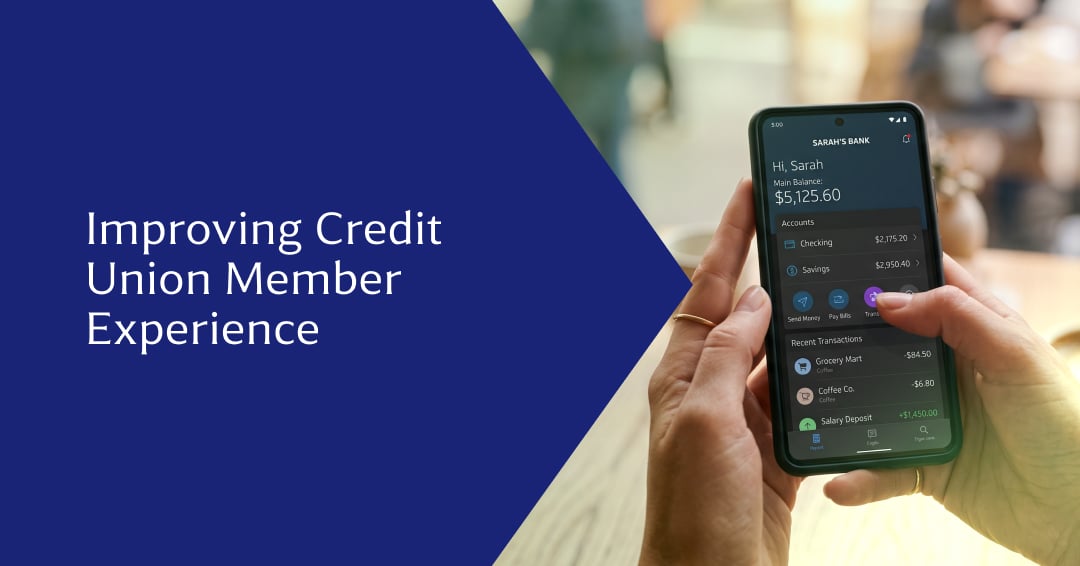
Credit unions usually think of customer service when someone asks about improving their member experience. That’s only one piece of the puzzle.

Managing chronic conditions often feels like trying to keep track of a conversation that keeps getting interrupted. You have patients coming in for a...

Healthcare has spent nearly two decades moving away from fee-for-service models to value-based care. CMS actually plans to have all Traditional...

Healthcare data moves through every part of care delivery. However, it's often scattered and poorly controlled. That reality creates gaps in...