The Role of Generative AI in Deflecting Calls Without an Agent
Generative systems have changed what happens after a call has been routed. Instead of simply pointing callers towards a FAQ page or another generic...
5 min read

In the realm of customer service, technology has led the way in driving significant advancements, with virtual agents emerging as one of the leading innovations. Virtual agents, often powered by artificial intelligence (AI), are computer programs capable of conducting conversations with customers. They assist users in navigating websites, answer frequently asked questions, help customers make purchases, and provide information about products or services. In some advanced cases, they can troubleshoot customer issues, facilitate bookings, or offer personalized recommendations based on user behavior and preferences.
These applications are seeing widespread adoption across industries for several reasons. E-commerce platforms are employing virtual agents to assist with order tracking and product queries, reducing the need for human intervention in simple tasks. In the banking sector, these agents provide immediate answers to customer queries about account balances, fund transfers, and more, thereby enhancing customer convenience. Travel agencies use virtual agents for tasks like flight booking and providing travel information, while healthcare providers use them to streamline appointment scheduling, prescription refilling, and preliminary patient diagnosis.
The expansive capabilities of virtual agents, coupled with their ability to provide immediate, round-the-clock service, are transforming customer experience in various industries, effectively reshaping the customer service landscape. With rapid advancements in AI and machine learning, virtual agents are becoming increasingly sophisticated, intelligent, and responsive, propelling an even more widespread adoption.
As we further delve into the data, we can observe the real impact virtual agents have had on customer experience in recent years and the promising trends to follow in the next year.
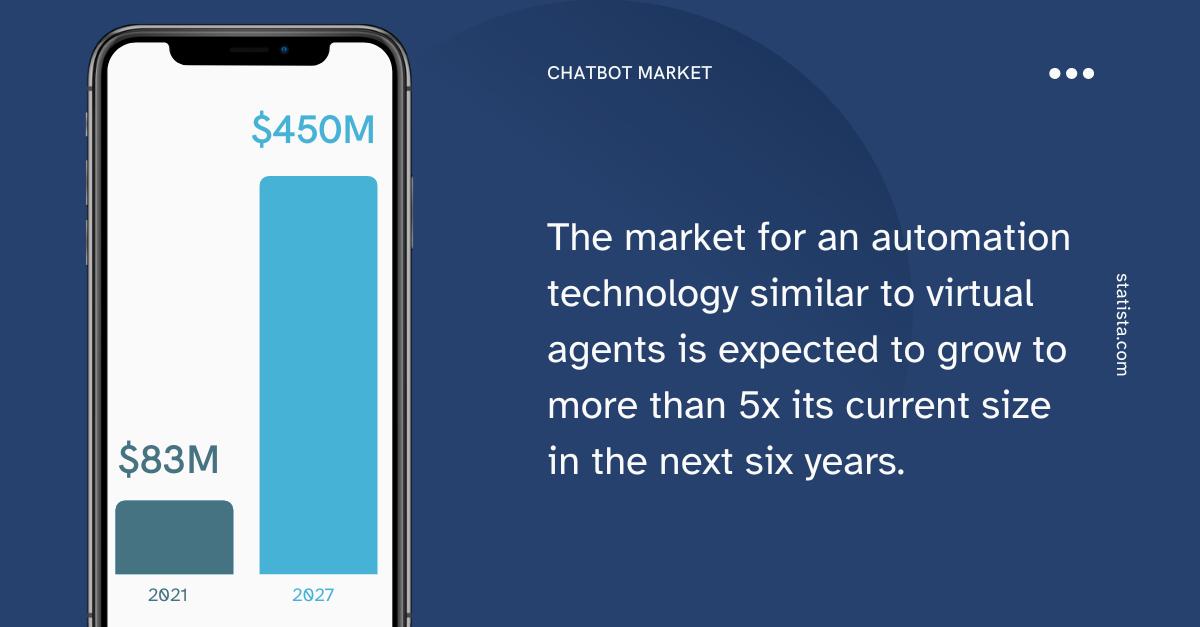
Over the last few years, virtual agents have become increasingly sophisticated and prevalent, significantly enhancing customer service experiences across industries. According to a 2021 survey by Statista, the chatbot market was $83 million at the end of 2021. Virtual agents are not chatbots, but as chat-based automation grows, so has voice-based automation. That market is expected to grow to more than $450 million by the end of 2027. The effects of this trend are manifold:
As these data points reveal, the adoption of virtual agents has proved beneficial for businesses, enhancing their customer experience while improving operational efficiencies and driving cost savings. The coming years are likely to see a continuation, if not an acceleration, of this trend.
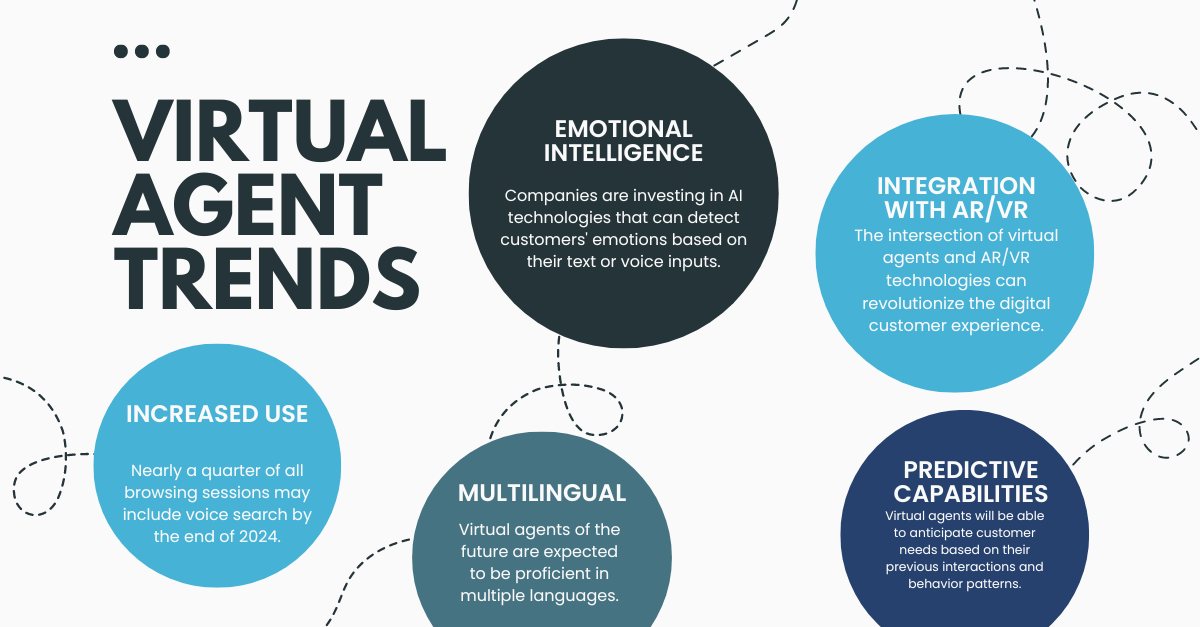
Understanding the utility and importance of virtual agents is just the start. This technology will continue to evolve and become even more essential to the modern enterprise. Here's a more in-depth look at the emerging trends that are expected to shape the future of virtual agents in 2024:
As we move closer to and into 2024, these emerging trends will undoubtedly shape the evolution of virtual agents. By staying ahead of these trends, businesses can maximize the potential of virtual agents to improve customer experience, enhance operational efficiency, and drive growth.
The advent and rise of virtual agents have dramatically reshaped the customer service landscape, bringing forth an innovative era where AI-driven customer interactions are not just commonplace but expected. These virtual agents have had a transformative impact on the customer experience over the past few years, providing immediate responses, tailored interactions, and round-the-clock service.
But the evolution of virtual agents is far from complete. As we look towards 2024, emerging trends point to a future where these agents are even more powerful, capable, and human-like. The integration of voice-activated technology, enhanced emotional intelligence, multilingual support, AR/VR capabilities, and predictive analytics in virtual agents is expected to create more engaging, interactive, and intuitive customer experiences.
At WestCX, we are dedicated to assisting businesses on their journey towards integrating these next-generation virtual agents. We provide insights, guidance, and solutions that are informed by the latest developments in AI and customer service technology.
For more insights into how virtual agents can transform your business and help you stay ahead of the curve, request a demo with a member of our team. We are ready to assist you in navigating the evolving landscape of customer service.

Generative systems have changed what happens after a call has been routed. Instead of simply pointing callers towards a FAQ page or another generic...

Hold times ultimately come down to the number of calls coming in, the capacity to answer them, and what callers do instead of waiting. Hiring more...

A credit union with hundreds of thousands of members can just as easily lose a significant portion of those relationships without realizing it....

According to G2, 40% of millennials engage with bots daily, and around 1.4 billion people use chatbots for communication. That represents a massive ...

5 min read
Smartphones and smart speakers give users nearly anything they want at the push of a button. AI virtual assistants like Siri, Google, and Alexa made...

In recent years, there has been a significant increase in the use of customer self-service in the form of chatbots and intelligent virtual agents (...