Cross-Selling in Banking: Matching Account Signals to the Right Offer
Ever received a call from your bank trying to sell you an additional product or service? That's cross-selling, a sales technique that aims to...
8 min read
Wait times have become one of the most visible friction points in healthcare today. This is something a patient experiences long before they ever step into a clinic. So they’re already forming an opinion about a provider before even sitting down for their appointment.
On the provider side, that pressure of accommodating waitlisted patients doesn’t show up as a single issue but as a constant imbalance between demand and available capacity. The waitlist is supposed to smooth that out, yet in many practices it becomes a passive holding space without much structure or visibility.
That gap between intent and execution is where access starts to break down. What looks like an administrative list often ends up shaping patient retention, continuity of care, and how much revenue actually makes it through the schedule.
Most people think of waitlists as holding areas. That's partially true. You have a list of patients who are waiting for the next available slot. The difference between that list-keeping and actual waitlist management in healthcare is that the latter follows a structured process.
You exactly know which patients are waiting and why. You're also keeping them engaged while they wait so that they don't move on to another provider. Speed is essential here but even more important is having a plan for who gets called when a slot opens. It's not always about serving the first name on the waitlist.
So you have patient prioritization, communication, cancellation recovery, and ongoing engagement happening all at once.
Several reasons are pushing waitlists longer than necessary. Provider shortages mean demand routinely exceeds capacity. There are specialty bottlenecks in areas like orthopedics and neurology that can push wait times into months. An aging population, furthermore, is requiring more frequent and more complex care.
Most waitlisted patients will seek care elsewhere if they don't hear from a provider. That silence is especially damaging for chronic or behavioral health patients. Someone managing depression or substance use can deteriorate significantly in the weeks they don't hear from their provider. Their condition may have already worsened to the point where a higher level of care is needed by the time they get an appointment. This can move the conversation from "delayed treatment" to "what treatment is actually needed".
A canceled appointment that doesn't get filled is billable time that's gone for good. Manual processes make this worse because the front desk has to call an entire list and potentially wait for callbacks. But most often the window for the slot closes before anyone confirms. Research notes that a provider can experience around 6,900 unfilled slots annually on average. That's over $250,000 in preventable losses.
Manual waitlist management is another way to quickly burn out your front desk. They have to first create a list of patients by pulling their names from the system. Then the coordinator has to call each one of them whenever a slot opens up, starting all over again after reaching the end of the list.
That's hours of repetitive work sitting on top of an already cumbersome day for the front desk. Most healthcare front offices don't even prioritize waitlists just for this reason. The high turnover and just makes it better for the provider to focus on the patients in the clinic or who managed to call back.
Referring providers means sending patients based on trust. But that trust can erode if the referring patient quietly disappears from a poorly managed waitlist. That eventually starts slowing down referrals as they stop sending more patients. This happens gradually and most practices only start noticing when the referral pipelines are dried up.
This is also a serious threat to specialty practices that particularly rely on referrals as they drive the most new patient volume. It can take them years to repair the damage to their referral relationships.
A poorly managed waitlist doesn't affect all patients equally. You have rural patients with limited transportation and non-English speakers who struggle with clear communication.
Medicaid patients deal with more challenges as they have fewer provider options. Add the fact that not everyone has flexible schedules, and you're looking at patients who are the first to fall through the cracks without a proper waitlist management process.
A provider that limits itself to phone calls during business hours is already working against such patients. It's their responsibility to cater to all patient types. A system that only works for patients who call back quickly is a system that serves the easy cases and loses the rest.
There's no single tactic for a strong waitlist management process. That combines a set of connected processes, each one setting up the next. It requires orchestration to maintain engagement while guiding the patient across their journey.
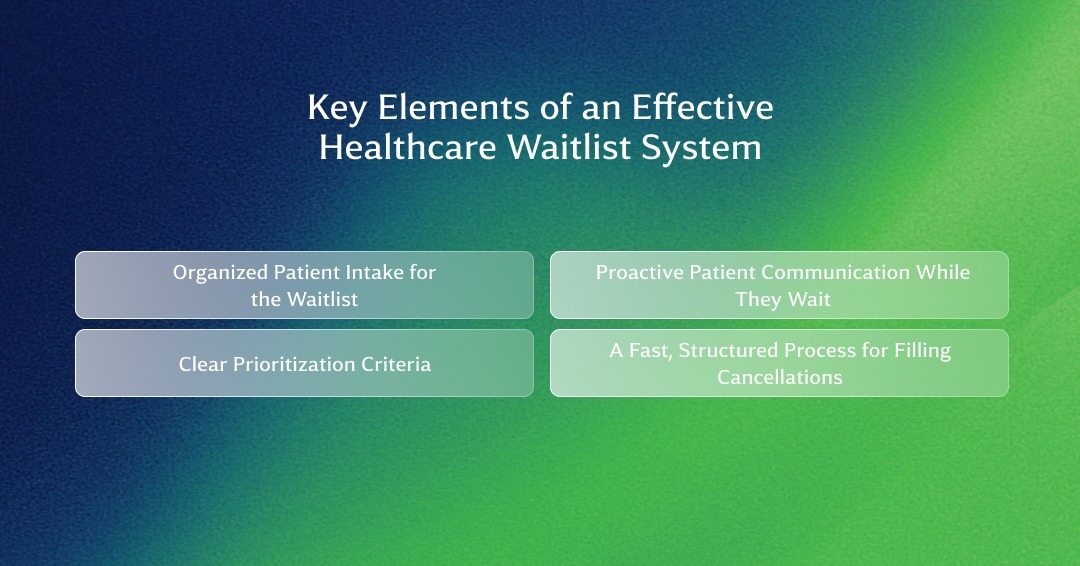
Everything downstream depends on what gets collected upfront. You need to know the following before a patient goes on the waitlist:
Don't take this as extra paperwork. You're making yourself ready to act when a slot finally opens. A waitlist entry with missing information means someone has to chase that down eventually. That just slows up the entire recovery process when a cancellation happens.
The information you collected in your intake should determine which patients get called first. Waitlist management isn't about serving the first name on the list. Patients with recent psychiatric crises must be put at the top for behavioral health. Someone with a procedure type or recovery timeline should always be put first for surgery. They can't wait another week even if they were put at the end of the list.
Hence, providers need to define their own criteria in advance so that the waitlist manager can make fast decisions when the time comes.
Patients who go weeks without contact feel forgotten. Most will start looking elsewhere and many won't tell you they've done it.
Regular check-ins fix this. A brief text or call every few days confirms the patient still wants an appointment. This consistent outreach also catches insurance changes before they become a scheduling problem and keeps the relationship intact.
Also, the contact frequency should match the wait duration. Basically, shorter waits need less outreach but someone waiting a month needs more consistent touchpoints. Using the patient's preferred communication channel here is key to making that engagement work.
The clock starts ticking immediately when a cancellation comes in. A well-designed recovery process doesn't waste time in detecting the open slot. It quickly starts identifying the waitlisted patients who match the criteria and notifies them all at once.
Contacting the entire list every time a slot opens is one of the most common mistakes in cancellation recovery. That only floods the entire office with responses and disappoints the patients who respond too late. You're left with a messy experience on both ends.
Instead, notify a handful of eligible patients, give them a clear window to respond, and confirm the first one who accepts. Everyone else stays on the list. The slot fills without chaos and the process is ready to run again for the next one.
Small practices can make do with manual waitlist management. They have shorter lists due to smaller patient volumes, giving a coordinator the time they need to make the calls or update a spreadsheet.
The breaking point comes when your patient volume grows or there's a sudden spike. Speed is the first thing that gets impacted. The same manual process suddenly takes longer. Compound that for each patient and it can even take the better part of a day.
Automated systems run the same process in minutes. They don't care if your volumes suddenly grow. Each cancellation triggers outreach to a targeted group of eligible patients. The system pulls the necessary information from your EHR and other databases to confirm the most suitable patients and locks in their appointments at their first confirmation. None of this involves anyone from your front desk.
The next thing to go after speed is accuracy. Spreadsheets don't update themselves when insurance information lapses or when patient availability changes. A coordinator working from a list that hasn't been touched in three weeks is calling wrong numbers and offering slots to people who can't take them. Automated patient waitlist management prompts updates, flags stale records, and keeps the working list current.
Then there's staff effort. Manual outreach pulls coordinators into repetitive call cycles that eat hours every week. That's time they should be spending on patients who are actually in the building. Automation ensures your staff gets their time back to deliver actual care instead of dialing numbers.
Finally, you have patient experience. This is easily the biggest differential between manual and automated waitlist management. Someone who gets a timely, clear message through a channel they actually use feels like the provider has them in mind. A patient who waits weeks for a callback or never gets one doesn't. The first group stays engaged. The second one starts looking elsewhere.
Your communication efforts don't have the same impact unless they're using the channels preferred by patients. It might seem like a small detail but it's often the reason behind how fast a slot gets filled.
A patient who prefers text isn't going to pick up a phone call in the middle of the workday. Someone else who relies on email won't respond to a voicemail sitting in an inbox they check once a week. The point is that the channel matters as much as the message. There's no point to a large outreach program if your response rates drop.
Texts produce the fastest engagement, especially automated SMS outreach. Most patients respond within the first hour of receiving an appointment offer. That early response window is critical for filling same-day and next-day openings. Phone calls and email lag well behind, and voicemails are hit or miss at best.
Two-way messaging takes that further. Patients can just reply to the message instead of calling back. The system automatically updates the scheduler based on that response without involving any staff member. That one change removes the callback bottleneck that slows down most cancellation recovery workflows.
Timing matters too and is something most providers get wrong. A patient waitlist management built around business hours misses patients who are at work or otherwise unreachable between 9 and 5. Automated outreach sent in the evening or early morning finds patients when they're actually able to respond. That alone improves your response rates.
The combined effect is faster slot recovery, less back-and-forth for staff, and a better experience for the patient who gets contacted the right way at the right time.
Providers need to start treating a waitlist as a data source. It's one of the most direct signals you can have about where your scheduling is breaking down.
Average wait times show how long patients sit before getting an appointment. Fill rate tracks what percentage of cancelled slots actually get recovered. You also have time-to-fill and abandonment rates that measure how long it takes to confirm a replacement and the number of patients who leave the waitlist before being seen.
All this data helps you spot patterns that improves waitlist management. For example, a high abandonment rate on a specific waitlist segment usually means communication is too slow or too infrequent. A long average fill time for one provider or location signals a capacity problem that better outreach won't solve.
This is the layer most providers skip entirely. They manage the waitlist without ever stepping back to ask what it's showing them about the bigger picture. That’s how waitlist management in healthcare stops being just a reactive process and starts actively shaping how you plan, schedule, and allocate capacity.
Adding more tools on top of an already fragmented system won’t fix your waitlist problems. What you need to do is gather all the disconnected pieces so that they not only work together but also move in sync.
That’s where we come in with WestCX. Your waitlist updates, appointment offers, and follow-ups stop staying trapped in isolated tools or manual processes. We make sure those interactions move through a coordinated workflow.
WestCX Orchestrate brings structure to how outreach is managed so patients stay engaged throughout the scheduling process.
We’re not in the business of treating outreach as one-off messages. Our orchestration layer aligns each step of communication so patients stay engaged while your scheduling team focuses on filling gaps instead of managing coordination. That matters most for a healthcare organization’s waitlist management because timing decides whether a slot gets filled or lost.
You also don’t have to worry about integration or compliance woes. The workflows stay aligned with your existing EHR environment. That means your team can keep working within familiar systems without duplicating effort just to keep information moving.
WestCX is also built with healthcare compliance in mind. Our platform supports HIPAA requirements and maintains HITRUST certification. Your patient information stays protected across the care journey.
Our goal isn’t to replace how your practice runs today, but to remove the friction between systems that were never designed to talk to each other in real time. WestCX brings those workflows together so communication feels consistent across channels and patients stay engaged throughout the full care journey, not just at the point of scheduling.
Schedule a free demo if you’re looking to see how that would work in your own setup. We’ll walk you through how WestCX Orchestrate can help you manage waitlists in healthcare while improving engagement rates.

Ever received a call from your bank trying to sell you an additional product or service? That's cross-selling, a sales technique that aims to...

Call deflection is a way to resolve customer issues through self-service channels. It improves your operations and lowers your costs because...
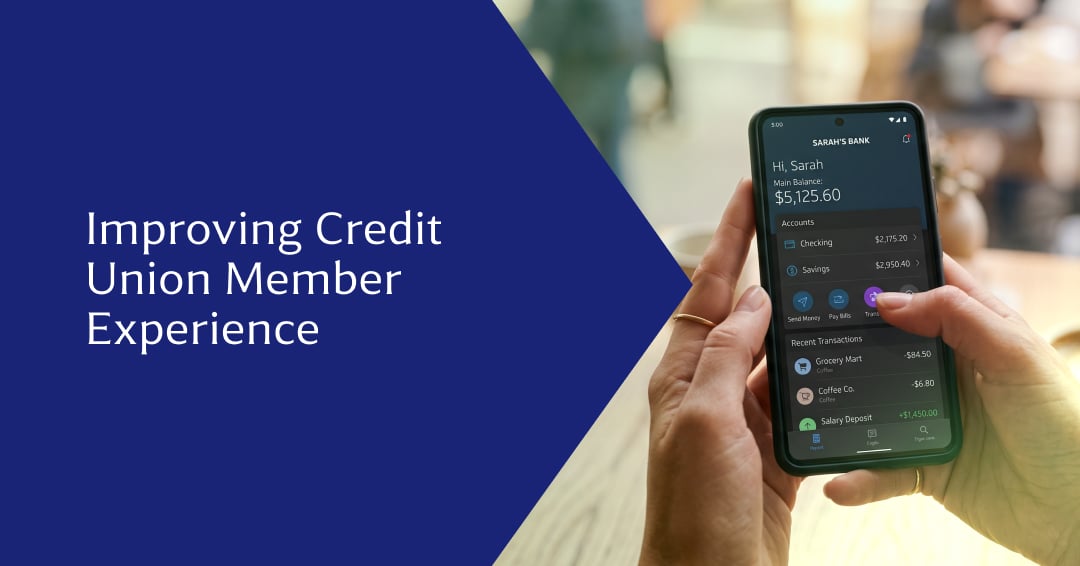
Credit unions usually think of customer service when someone asks about improving their member experience. That’s only one piece of the puzzle.

Thousands of patients walk into their provider's office every day to be handed a clipboard. It's the same form they've filled several times before:...

Imagine a patient who arrives at a hospital 10 minutes early, only to spend the next 15 minutes trying to find the right department. An intersection...

If you think about it, most collection teams inherit problematic accounts that could have been prevented much earlier. Hence, loan delinquency is...