Cross-Selling in Banking: Matching Account Signals to the Right Offer
Ever received a call from your bank trying to sell you an additional product or service? That's cross-selling, a sales technique that aims to...
8 min read
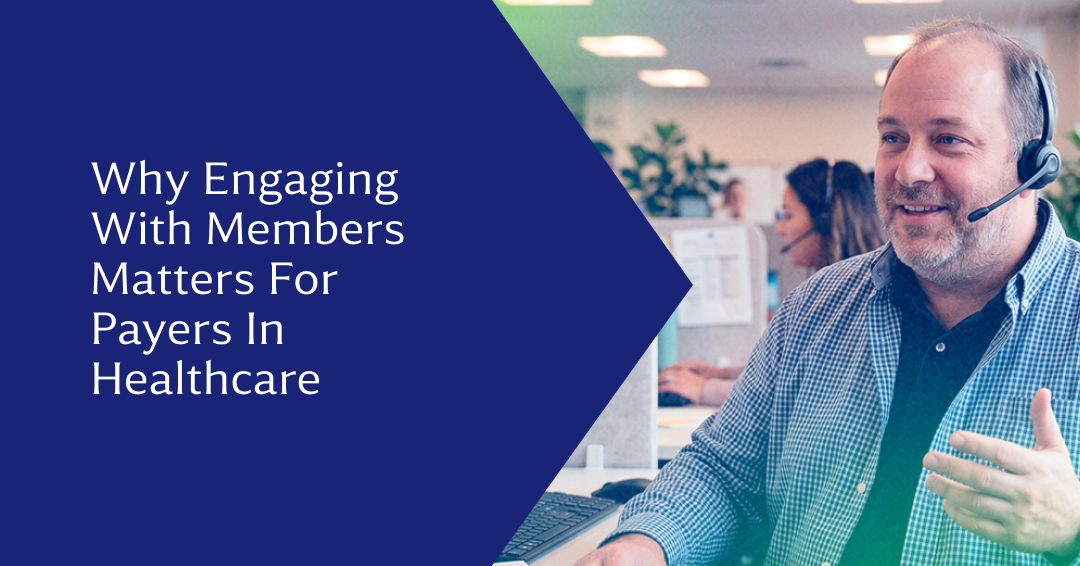
Most payers tend to measure engagement by what’s easy to count. But touchpoints, portal logins, and outreach volume don’t say much about whether a member actually did something differently because of them. That’s where the gap starts to show.
Members often don’t feel like their health plan is working in their best interest, even when communication is constant. Sending more messages won't fix that disconnect. That actually creates more disengagement.
Let's look at what an effective payer member engagement requires and how to build it in a way that actually changes behavior.
Engaging payer members is directly tied to business performance in healthcare. It firstly impacts your retention because members who feel unsupported or confused about their benefits don't stay for long.
Acquiring a new member also costs significantly more than keeping one. Not to mention that every exit resets whatever care management progress you were making. This makes churn a highly expensive affair.
Then there's reimbursement. Star Ratings and HEDIS performance are directly tied to whether members complete preventive care visits and stay on their medications. Plans that can't reach their members miss those benchmarks, losing the CMS bonus payments that come with higher Star scores.
The clinical picture is just as stark. For every 100 prescriptions written, only about 25-30% are actually taken as prescribed. Each of those gaps represents both a missed health outcome and a cost left unmanaged.
Strong engagement, on the other hand, makes it easier for patients to stay on track with their medications and address issues before they escalate. That’s what ultimately helps avoid costly acute events. Members who feel informed and supported also make better decisions about where and how they seek care. It keeps unnecessary ER visits and specialist referrals in check.
Most payers know engagement matters. Many have already invested in outreach, digital tools, and care management teams. The results still fall short because of structural reasons.
Contact data doesn't stay accurate on its own. Most members rarely think to update their insurance information when they move or change numbers. That means payers are often using contact details that went stale months ago.
Medicaid is the hardest case because lower-income members relocate the most. State agencies also face processing delays due to manual data entries and limited plans.
These issues lead to a wider gap between who the plan thinks it's reaching and who's actually on the other end.
Legacy systems create data silos. Outdated platforms make it harder to share information across departments. Members end up receiving conflicting messages from different parts of the same organization. This disconnected experience leaves care management teams reacting to gaps while members consider moving on.
Social Determinants of Health (SDOH) add more complexity. An appointment reminder won't help someone solve their transportation issue. A non-English-speaking member who gets an English-only outreach piece is effectively unreached. Personalizing outreach helps here but it requires data that many plans don't have.
Incentive and intervention programs often miss the point. Most of them track contact rates and outreach volume when what actually matters are the outcomes. Did the member complete a wellness visit? Why didn't they pick their last refill? Optimizing only for activity is one of the most common and most costly mistakes in member engagement.
Getting engagement right means getting specific. The strategies below address distinct points in the member journey. They show how different data inputs and outcomes are designed to move.
Most engagement programs are reactive. The problem with that is the response comes too late to make a meaningful difference.
Proactive outreach changes that by using triggers specific to journey stages. Contact is initiated at the right moment instead of waiting for a problem to surface. This engagement strategy especially focuses on members who were recently discharged or who haven't refilled their prescription in the past 2 months. These are the members at the highest risk of readmission.
Predictive analytics make proactive support more precise. Models built on claims data and SDOH signals can identify which members need contact right now. The accuracy improves with time as you make adjustments after comparing your predicted outcomes with actual results.
Multichannel doesn't mean sending the same message via SMS, email, and phone on the same day. Your system needs to use the channel each member prefers while preserving context. That’s how you have a better chance of them responding.
Context continuity matters just as much as channel preference. If a member has already responded to an SMS about a care gap, the next touchpoint shouldn't restart the conversation from zero. Members who have to re-explain their situation disengage quickly. Such members are also hard to win back.
Remembering someone's first name isn't personalization. Your system can tell you that much. Real personalization reflects how relevant your messaging is for each member. That means your communication must be tailored based on their current account status, risk profile, and behavioral patterns.
For example, a member who has responded well to care management in the past can receive lighter outreach. There's no point in spamming him with more messages. Someone else who has disengaged repeatedly may need a different channel or a different kind of offer before any clinical message even registers.
Segmenting by risk category is a start. Research shows the demand for personalization is already there. 65% of members say they’re more likely to choose a health plan that offers personalized, AI-driven experiences. That preference directly affects both engagement rates and plan retention decisions.
SDOH determines whether the message reaches anyone in a meaningful way and whether the recommended action is actually possible. But your communication strategy doesn't require a full overhaul to include SDOH data.
The data that's available to you right now is a good enough starting point. That includes data like claims patterns, enrollment information, and social risks. These are enough to flag members likely facing specific barriers and then adjust your outreach accordingly.
Payers that acknowledge social context in their outreach earn more trust from members who've historically been overlooked by health system communications. That trust is what makes clinical engagement possible in the first place.
Members often read billing notices and claims confirmations more carefully than any standalone outreach piece. This is because it involves money. That makes them some of the highest-value surfaces available to payers for embedding additional engagement content.
Your billing notice can include a one-line reminder about an open care gap. Your claims confirmation can highlight an unused wellness benefit. Even in the case of EOB, you can mention a care management program the member qualifies for. These additions are cheap but more likely to produce action.
Incentive programs are common but few are effective. The difference almost always comes down to what behavior the incentive is actually tied to.
For example, a gift card for completing enrollment is a weak signal. The member was going to enroll anyway. But incentives tied to completing a specific health action work differently. The first medication fill or a wellness visit are behaviors a member might not have taken without a push.
Keep in mind that the structure of the incentive should always match the behavioral goal it's meant to support.
Running a single outreach campaign across a pool of 5,000 members is a big mistake. This is because not every member needs the same campaign. Someone might be dealing with uncontrolled hypertension while another is overdue for their annual cancer screening. Bundling them up makes it nearly impossible to know what actually drove any outcome.
Targeted campaigns segment by condition, risk score, and care gap type. A campaign designed to close the colorectal screening gap sends one kind of message with one specific action ask. A campaign targeting members at risk for medication non-adherence sends a different message on a different cadence. The specificity makes the content more relevant and the call to action clearer.
This directly connects to HEDIS performance and Star Ratings. Many of the measures that drive quality scores are addressable through targeted outreach when members can be identified early and reached before the measurement period closes. Plans that run these campaigns systematically, well ahead of HEDIS capture windows, consistently outperform plans that treat care gap closure as an end-of-year scramble.
AI-powered solutions for payer member engagement have made this level of targeting much more precise. Machine learning models built on clinical data, claims history, and SDOH signals can identify which members within a care gap population are most likely to respond to outreach. The system also tells you which channel and message type will work best for each.
The gap between an outreach that consistently gets it right and another that runs programs members never use usually comes down to a handful of operational habits. It has little to do with budget or technology.
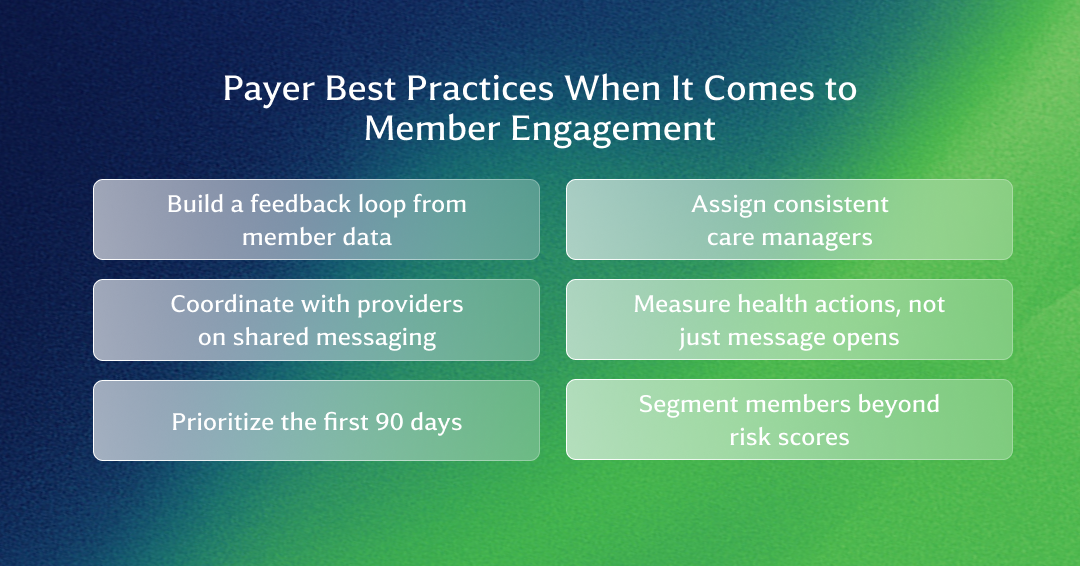
Most plans already have the data they need. We've covered this before in our blog as well. Claims history, ADT alerts, SDOH information — it's all there. The difference is what you do with it.
The plans that get consistent results are closing the loop. When a high-risk member doesn't pick up their prescription after three outreach attempts, that information should shape how similar members get contacted next time. This improves the accuracy of your predictive models over time. Data without that feedback loop is of little use.
One of the most consistent problems in payer member engagement is the disconnect between what a plan says and what a provider says in the exam room. Trust actively breaks down when those messages don't match.
You improve adherence by getting your plans and providers on the same page. It doesn’t have to be complicated to work. Start with a shared care plan and then make sure there’s a simple way to know when a visit happens. That one signal gives you the perfect moment to follow up while the member is already thinking about their health.
The first 90 days set the tone for everything that follows. Members who quickly understand their benefits are far more likely to stay engaged. Someone who doesn't know who to call or what's covered will likely fall off over time.
The better approach here is a structured sequence. Make an initial contact within the first two weeks and then walk through the benefits by week four. Send them a prompt for a preventive care visit around weight eight and then follow up at 90 days to confirm the member has taken at least one concrete health action.
Members don't like explaining their situation every time they call. This is especially true for chronic patients who are already emotionally stressed. Such high-risk members should never bounce between care managers. It damages trust and your retention rates. It's better to keep the same care manager assigned to a member and protect that continuity even when staffing gets stretched.
Open rates are easy to report on but they're also mostly meaningless on their own. Did a plan work through traditional outreach or AI-powered tools? Did a multichannel strategy work for one payer member or did they engage due to another element? The plans that know the answers to these questions are the ones that actually improve.
Payer plans that segment members by their consumer persona see higher engagement rates. Goes beyond basic risk tiers to include communication preferences, health literacy, contact timing, and daily responsibilities. Treating two fundamentally different people with the same script is one of the fastest ways to lose both of them.
Most engagement breaks down at the moment it’s supposed to come together. You have the data, the channels, and the intent, but none of it moves in sync when the member actually needs it. AI helps here but not to send more automated messages. You need a way to decide what gets said, when it gets said, and why it matters in that moment.
That’s the role WestCX Orchestrate steps into. We give you an orchestration layer that connects your systems, signals, and outreach so your communication actually moves with member behavior.
Our conversational AI builds on that by helping you deliver interactions that feel natural across voice, SMS, chat, email, and web. Your members won’t ever feel like they’re switching between disconnected experiences.
Instead of sending reminders in isolation, you’re able to respond to events as they happen. Every missed refill, completed visit, and care gap becomes a coordinated opportunity to reach out in a way that feels relevant. AI helps you interpret those signals, but our orchestration layer is what turns them into action across channels without losing context.
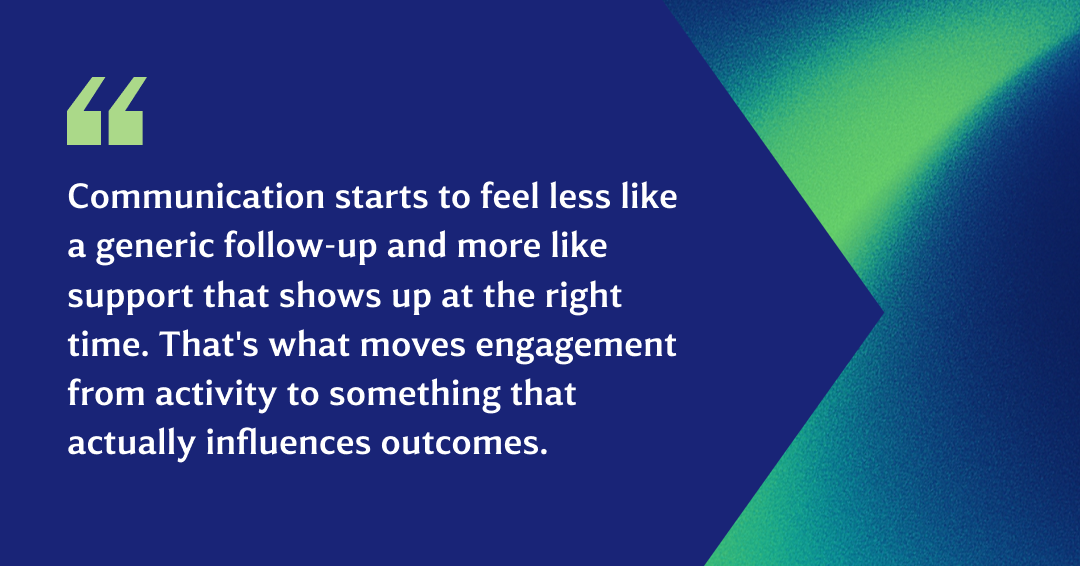
That shift changes how members experience your plan. Communication starts to feel less like a generic follow-up and more like support that shows up at the right time. That’s what moves engagement from activity to something that actually influences outcomes.
Request a demo to see how WestCX Orchestrate works in practice.

Ever received a call from your bank trying to sell you an additional product or service? That's cross-selling, a sales technique that aims to...

Call deflection is a way to resolve customer issues through self-service channels. It improves your operations and lowers your costs because...
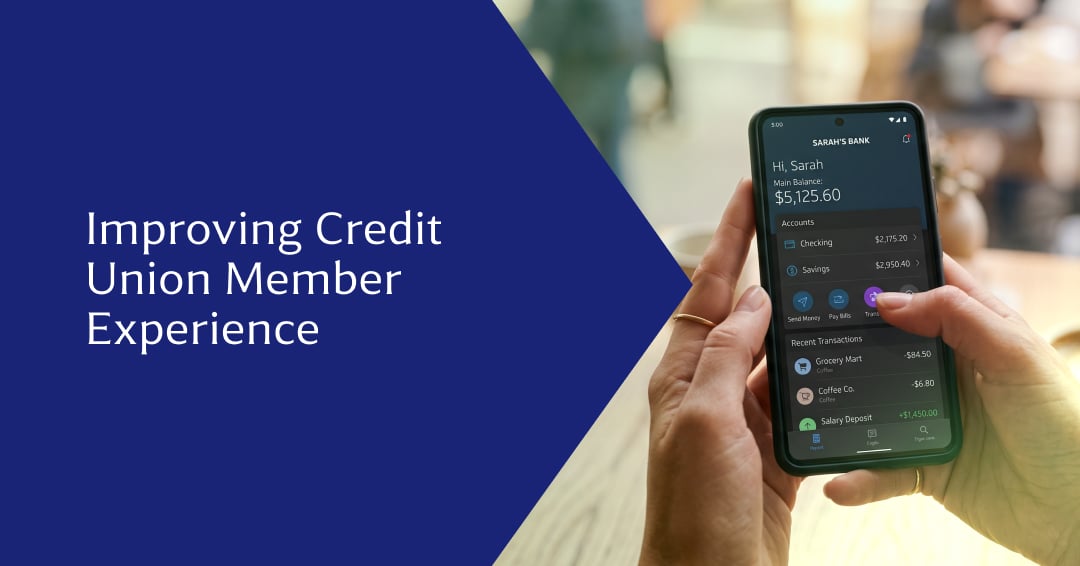
Credit unions usually think of customer service when someone asks about improving their member experience. That’s only one piece of the puzzle.
Getting someone to open an account is only half the job. The harder part is giving them a reason to 'not' treat your credit union as just another...

Nearly half of all patients don’t take their medications as prescribed. A significant share never even fills the first prescription. That’s the...
.png)
Hospital readmissions don’t just happen all of a sudden. They build up in the days after discharge and are not always a clinical issue. It often...